
Vancouver’s waters come alive each year with the magnificent presence of humpback whales, creating unforgettable experiences for wildlife enthusiasts with Wild Whales Vancouver. These gentle giants return to the nutrient-rich coastal waters from spring through fall as part of their annual migration pattern. The waters surrounding Vancouver have become an increasingly popular destination to witness these massive marine mammals, with growing populations spending their entire summer feeding in British Columbia.
Humpback Whale Migration
Humpback whales undertake one of the longest migrations of any mammal, traveling thousands of miles between their feeding and breeding grounds each year. They spend winters in the warm tropical waters of Hawaii and Mexico, where they breed and give birth to calves, before making their way to the waters near Vancouver.
During spring, they begin their incredible journey northward to reach the nutrient-rich feeding grounds of Alaska and British Columbia. This round trip can total up to 5,000 miles annually, as Wild Whales Vancouver’s naturalists often explain to fascinated guests.
The journey isn’t a simple north-south route—they follow complex patterns tied to ocean currents and food availability. These giants travel at a relatively leisurely pace of about 3–9 miles per hour, making their seasonal treks truly epic voyages.
Identifying Humpback Whales
Humpback whales are easily distinguished by their massive size (40–50 feet long) and characteristic behaviors. Their most recognizable feature is their distinctive tail flukes, which are as unique as human fingerprints. Guides often point out different patterns to help guests identify individual whales.
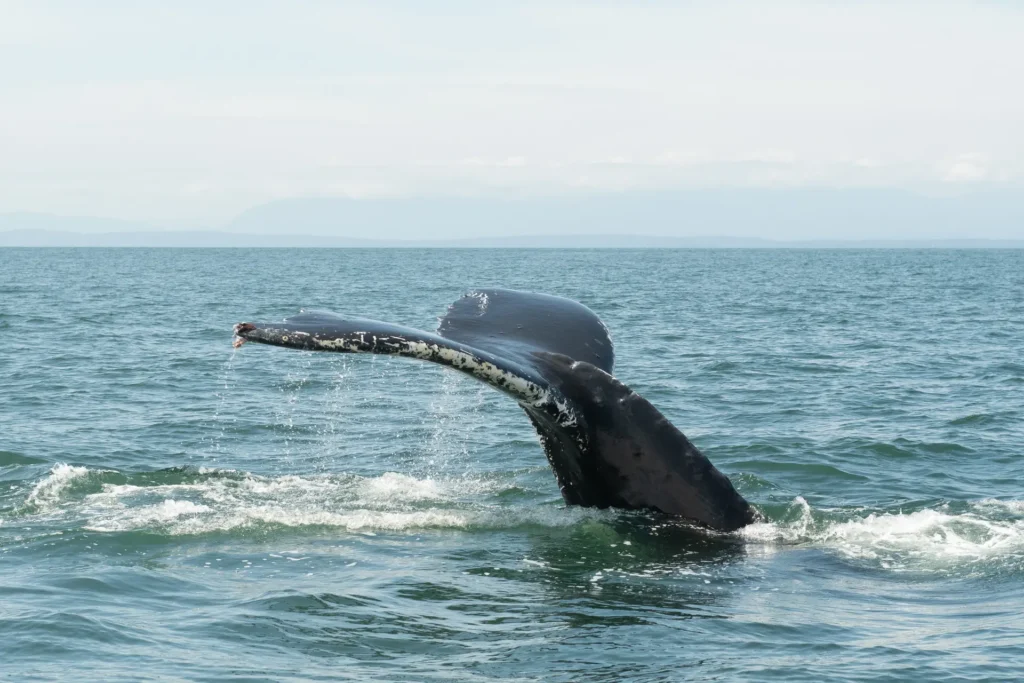
Scientists use identification photographs of these flukes to track individuals, estimate population size, and monitor migration patterns. Scarring and natural markings also help identify specific whales—some of which become well known in the Salish Sea. Wild Whales Vancouver supports this research through sighting reports.
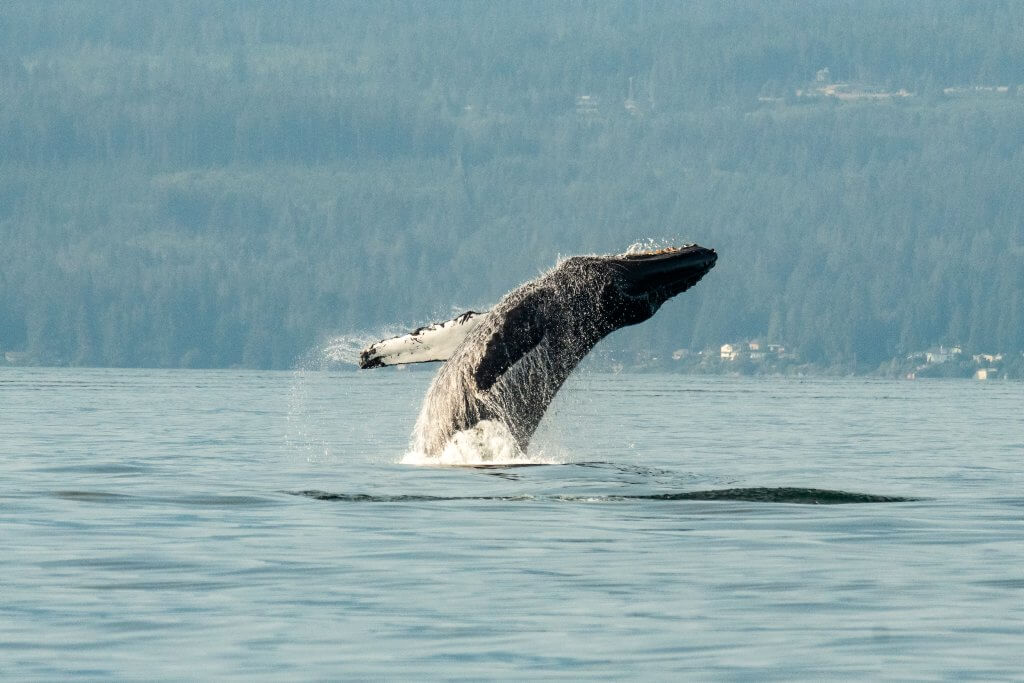
When watching for humpbacks, look for their bushy, tall, straight blow, which can reach up to 10 feet high. Their spectacular surface behaviors include:
- Breaching: Leaping partially or completely out of the water
- Lunge feeding: Surging forward with open mouths to capture prey
- Pectoral slapping: Slapping their large front flippers on the water
You might also witness them dive deep for food, displaying their magnificent flukes above the water—an unforgettable sight for photographers.
Whale Watching Tips and Tours
Departing from Granville Island, tours quickly reach prime humpback viewing waters just beyond English Bay. These excursions offer opportunities to see not only humpbacks, but also orcas, gray whales, and minke whales.
Their acrobatic behaviors—like breaching, lunge feeding, and pectoral slapping—make humpbacks particularly thrilling to observe in their natural habitat.
All vessels maintain a minimum distance of:
- 100 meters from most whales
- 200 meters from killer whales
This helps minimize disturbance to their natural behaviors. Highly educated naturalists onboard share conservation insights while ensuring all regulations are followed, helping visitors understand the importance of protecting these marine animals.
Significance of Vancouver Waters
Vancouver Island and British Columbia’s coastal waters serve as crucial feeding grounds for migrating humpbacks. The nutrient-rich environment supports abundant krill and small fish—essential food sources that make this region ideal for humpback whales.
The best time to spot these magnificent creatures is from May to October, when they are actively feeding in the area. This feeding period is critical for building up the blubber reserves they need for their long journey south to winter breeding grounds.
The Salish Sea has become an increasingly important habitat for humpbacks, with growing numbers returning each year. Their presence is a strong indicator of a healthy marine ecosystem—a true conservation success story.
Frequently Asked Questions
When is the best time to see humpback whales?
While humpback whales can be seen as early as April, the prime viewing season runs from May to October. During these months, the waters around Vancouver host larger numbers of migrating humpbacks.
Both morning and afternoon tours offer excellent wildlife viewing opportunities:
- Morning tours: Cooler temperatures
- Afternoon tours: Warmer conditions
Humpback whales make up about 50% of whale sightings during peak season, with orcas accounting for most of the remaining sightings.
Wild Whales Vancouver is so confident in wildlife encounters that they offer a whale sighting guarantee—or a free return trip if no whales are spotted.
Why is there an increase in humpback whale sightings near Vancouver?
Humpback whale populations have been steadily recovering since commercial whaling was banned in 1966. Their numbers in the North Pacific have grown from approximately 1,400 to over 21,000—a remarkable conservation success.
Improved water quality and stronger marine protection regulations have helped create a healthier ecosystem around Vancouver. This has led to more abundant food sources, attracting more humpbacks to the area.
Each year, more whales return with new calves, many of which come back season after season. With an increase in available food, more humpback whales are now staying in the Salish Sea for the entire feeding season.