
Vancouver’s harbour seals are among the most charismatic marine mammals encountered during whale watching excursions around this beautiful coastal city. These nimble creatures, with their torpedo-shaped bodies and webbed flippers, are perfectly adapted to life in the cold Pacific waters.
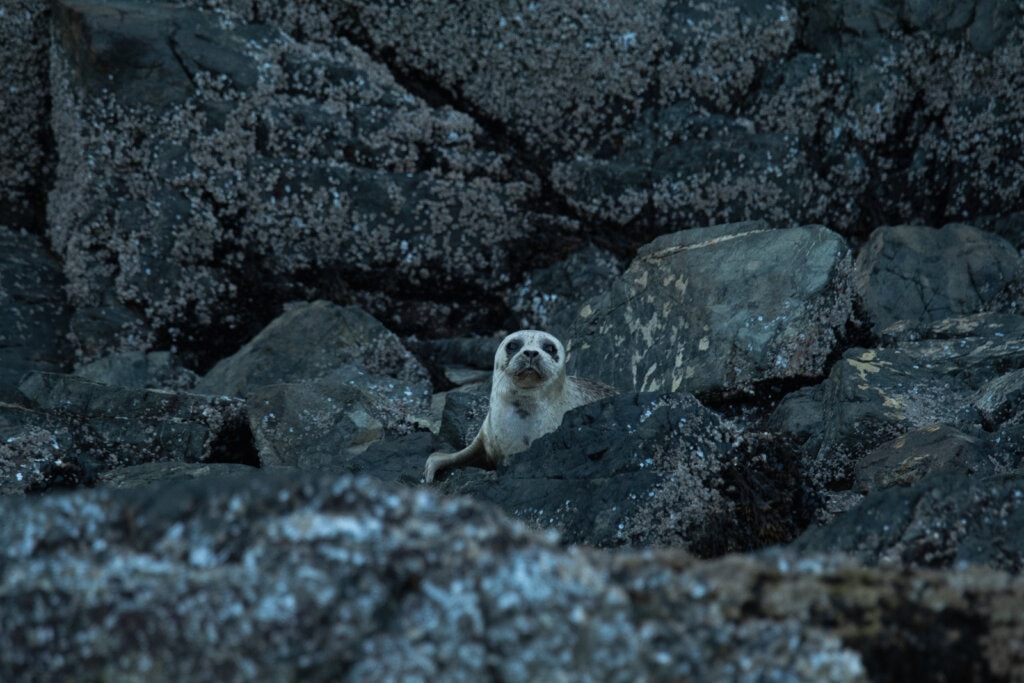
Harbour seals are an essential component of British Columbia’s marine ecosystem, playing a vital role in maintaining the balance of the Salish Sea’s intricate food web—the same waters where whales and porpoises thrive.
You’ll often spot these charming animals lounging on rocky outcroppings, small islets, and navigational buoys along whale watching routes. Unlike their larger cousins, sea lions, harbour seals tend to be more solitary when swimming but will gather in loose groups when resting.
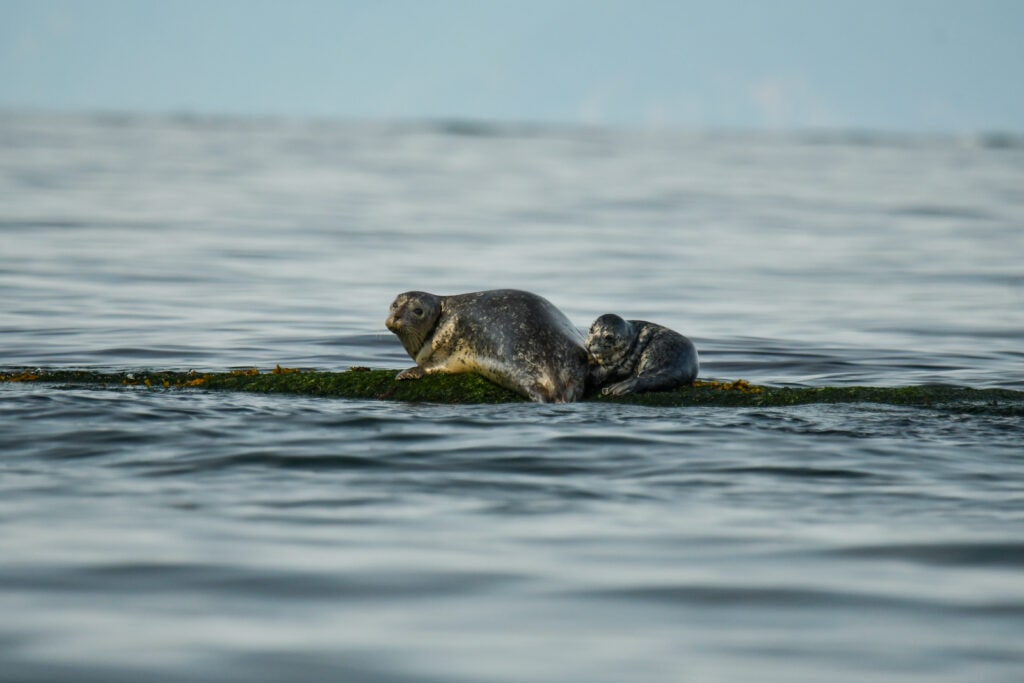
Adults typically reach about 1.5 meters in length and weigh around 70 kilograms, making them relatively small compared to other marine mammals encountered during tours. While orcas and humpbacks may be the headline attractions, these engaging seals provide delightful bonus sightings that enhance the overall experience.
Harbour seal populations are thriving and have rebounded impressively since protective measures were introduced decades ago. Today, these marine mammals can be found throughout British Columbia’s coastal waters.
Conservation Success Story
Harbour seal populations have made an incredible comeback since hunting was banned, creating abundant viewing opportunities during whale watching excursions. Their numbers have increased dramatically since 1967, when hunting practices came to an end.
Today, harbour seals are protected under various wildlife regulations in Canada. Their recovery is considered one of British Columbia’s major conservation success stories, with populations now believed to be similar to historical levels before commercial hunting began.
Viewing Guidelines and Ethics
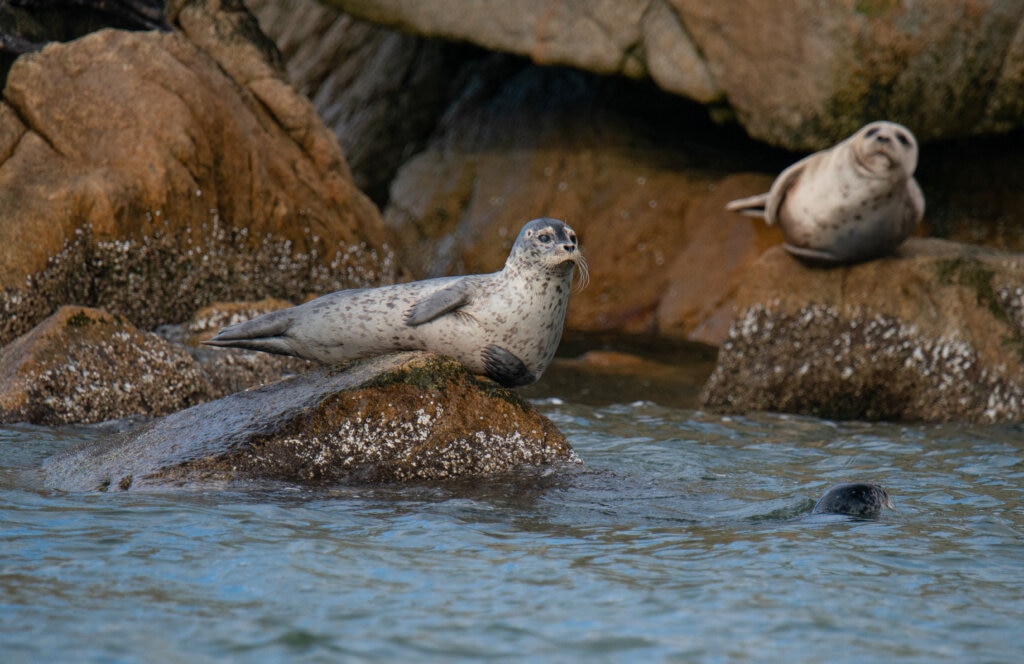
Wild Whales Vancouver follows the Pacific Whale Watch Association guidelines for marine mammal viewing, which include specific protocols for seal encounters. This includes reducing speed on the approach and when leaving seals as well as keeping 100m distance from them. These industry-leading practices ensure that wildlife viewing remains sustainable and respectful of all marine species encountered during tours.
Predator-Prey Dynamics
Harbour seals play a complex role in the marine food web. As mid-level predators, they feed on various fish species, including herring, salmon, and rockfish—the same prey that sustains many of the whale populations observed during excursions.
This shared prey resource creates interesting ecological dynamics. When participants observe both harbour seals and whales during the same tour, they’re witnessing different predators that have evolved distinct hunting strategies within the same ecosystem.
Transient (or Bigg’s) orcas specifically target harbour seals as a primary food source. Whale watching participants sometimes witness these hunting behaviors, providing dramatic but natural wildlife encounters that showcase the predator-prey relationship.
Frequently Asked Questions
How often are harbour seals spotted during whale watching tours?
Harbour seal sightings are very common during Vancouver whale watching excursions. These abundant marine mammals are encountered on approximately 95% of tours in the Salish Sea, making them one of the most reliable wildlife sightings—even when whales are harder to find.
How can we tell the difference between harbour seals and sea lions?
Harbour seals have small ear holes but no external ear flaps, while sea lions have visible external ear flaps.
Mobility differences are striking when observed. Harbour seals move by wiggling on their bellies when hauled out, while sea lions can rotate their rear flippers forward to “walk” on land more efficiently.
Size and color also help differentiate these pinnipeds during tours. Harbour seals are generally smaller (1.5m, 70kg) with spotted coats, while Steller sea lions encountered during tours are significantly larger (up to 3m, 1000kg) with more uniform coloration.
Social behavior offers additional clues. Harbour seals tend to be more solitary or gather in loose groups, maintaining distance between individuals even when sharing the same haul-out. Sea lions form tight, vocal colonies with considerable physical contact.